Adjusting Summerhouse Doors: Why They Won't Open, Close or Lock
4 reasons your summerhouse double doors might not lock
Do you have to lift the handle, give the door a shove, then try the lock again to get your summerhouse door to lock?
If your glazed summerhouse door takes that much persuasion, the lock may not be the real problem. The door could have gone out of square, the hinges may be struggling, or the opening itself may have moved. Each leaves a different clue.
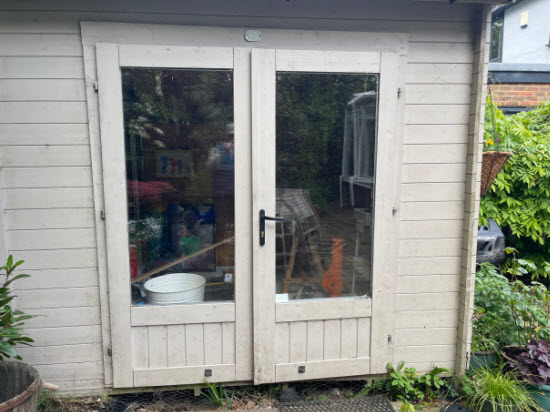 This pair of glazed summerhouse doors had moved and it wasn't possible to close them!
Here are four things to check to help you diagnose why your summerhouse door won't close.
In my experience, the first two - loose door joints and troublesome hinges - are the most likely causes.
Seasonal swelling and movement in the surrounding frame can also affect the fit, but usually need a different kind of repair.
Before we go into the details, look at the gaps around the edge of the door
Close the door as far as it will go without forcing it.
- Is it scraping the threshold?
- Does it rub against the other door?
- Does it swing freely but stop short of the latch?
- Look at the gaps around the edge of the door and see whether they stay roughly even or taper towards one corner.
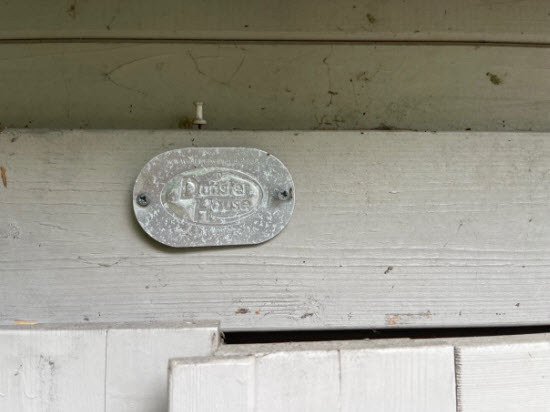 Here you can see from the outside how one door has dropped relative to the other. The doors can be adjusted in this situation.
A door that will not open can be stuck against the frame, or the latch may still be holding it.
Avoid hauling on the handle. Note where the door moves and where it stays caught; that can also help distinguish a binding door from a lock problem.
Let's look at the most likely causes
1. The door joints may have loosened
A glazed summerhouse door can look perfectly sound while its frame has slowly moved out of shape. The glass adds a lot of weight to a timber frame, and over time the mortice-and-tenon joints at its corners can loosen. The door then racks slightly out of square: one corner drops and the latch side no longer lines up as it should.
You can easily check the shape by measuring diagonally across the face of the door, from one corner to the opposite corner, then measuring the other diagonal. If the door is square, those measurements should be the same. A difference - even a relatively small one, such as 5 - 10 mm, suggests the door has racked.
With a small difference, you may not notice much at the timber joints perhaps just some water staining or a very small gap. A major repair may not be necessary. An adjustable brace can pull the door back towards square and help support it. It consists of a thin wire rope with a turnbuckle. Turning the turnbuckle adjusts the wire-rope's length and pulls the door back into square. On a glazed door, the wire is just visible through the glass, but it is a modest visual trade-off compared with replacing a whole pair of doors.
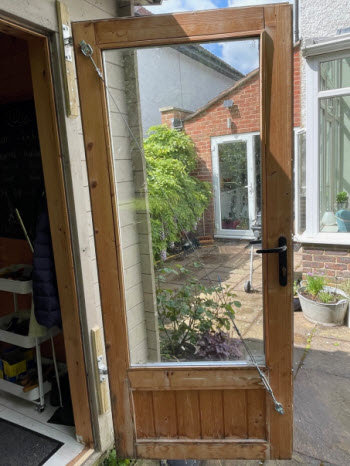 Here you can see an adjustable brace being used to pull the summerhouse door back into shape
I explain the same basic principle on a conventional shed door in my guide to straightening a sagging shed door with an adjustable brace. Glazed doors need a different arrangement, which I'll show in the step-by-step article linked at the end.
The next issue can occur at the same time as loose door joints.
2. The hinges may be binding or pulling loose
Open and close the door gently. It should move freely. If a hinge binds, feels rough, or shows corrosion, it may be contributing to the problem. Look too for screws that have loosened, a hinge moving in the timber, or wood that has split around the fixing.
Some summerhouse doors are hung on small knuckle hinges that offer little or no adjustment. They can be a weak point on a heavy glazed door. Tightening a screw may help if the timber is sound and the fixing has simply loosened. It will not repair a split fixing or give you a way to fine-tune the door's position.
Adjustable gate hinges provide that adjustment. Once the door is square, they let you move it into the right position in the opening and line up the latch or interlocking parts. They also make future adjustments simpler should the door move again.
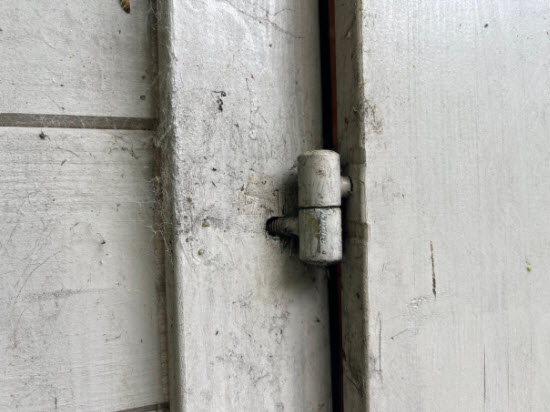 This small knuckle hinge had pulled out of the wood and was contributing to the problem
In my experience, the first two causes are the most common. With a little time and the right hardware, you may be able to get your door shutting sweetly once more.
If they aren't the root of the problem, there are a couple of other, more fundamental issues to consider.
3. The timber may have swollen
Timber takes in and releases moisture over the course of a year. A door exposed to frequent rain may swell enough to catch against its frame, particularly if its edges are poorly protected. A sheltered doorway or a useful roof overhang reduces the amount of rain reaching it. A suitable wood stain can help limit water uptake, though it cannot prevent all seasonal movement.
To identify whether this is the cause, look for consistent contact along one edge and consider whether the problem changes with the weather. Don't reach for a plane straight away. If the door has actually dropped or gone out of square, removing timber can leave an uneven gap once the door is put back into position. And if a door is jammed shut, forcing it may damage the handle, hinges or frame.
Let's move on to the final possibility.
4. The opening may have moved
If the door itself is square and the hinges move freely, check the surrounding frame. Measure the diagonals of the opening: if they differ, the frame may no longer be square.
A large door opening can leave a wide section of wall vulnerable to wind loading, which may push the whole shed out of square. Movement in the foundations can also distort the frame. If the cabin is built on a concrete slab, this makes differential foundation movement less likely, though it does not rule it out. If the opening has shifted, adjusting the door alone will not address the cause; this may need a larger repair.
How to get your summerhouse door opening and closing sweetly again
Start with the doors and hinges. Begin with the two causes we see most often: joints that have loosened under the weight of the glazing, and hinges that have worn, bound or pulled away from the timber. Check the door's diagonals, watch how the hinges move, then consider swelling of the timber or movement in the opening if those first checks don't explain the problem.
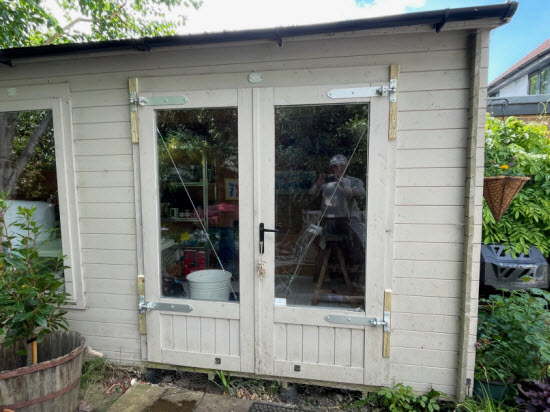 The completed repair with new braces and hinges. These are adjustable so any movement in the future can easily be accomodated
If you are in West Kent or East Sussex and would like us to assess your summerhouse doors, send a photo of the whole opening with the doors as close to shut as possible.
In the next article, I'll show how we straightened a glazed summerhouse door and adjusted its hinges so the doors and locking parts lined up again: How to adjust bifold log cabin doors with an adjustable brace and gate hinges




Keep in touch with our monthly newsletter
Shed Building Monthly